What the Original Container Floor Brings Into a Converted Room
The floor is the one part of a used shipping container that people tend to admire and then forget. It’s thick, it’s hardwood, and after years at sea it has a patina that looks great in photographs. It also arrives with a history the buyer usually knows nothing about. Many timber container floors have insect-control treatment so they can cross borders, and they’ve carried whatever cargo the box has carried. That doesn’t mean the floor is a problem. It means it’s worth understanding before deciding to keep it, cover it or replace it.
Take a couple who have bought a used 20-foot container to turn into a craft studio at the end of their garden. They plan to line the walls, add a glazed door and spend a lot of time sitting and kneeling on the floor, cutting fabric and working on small craft projects. The seller’s description says the box is wind and watertight with its original floor. That’s all they know about it, and it’s enough to start asking the right questions.
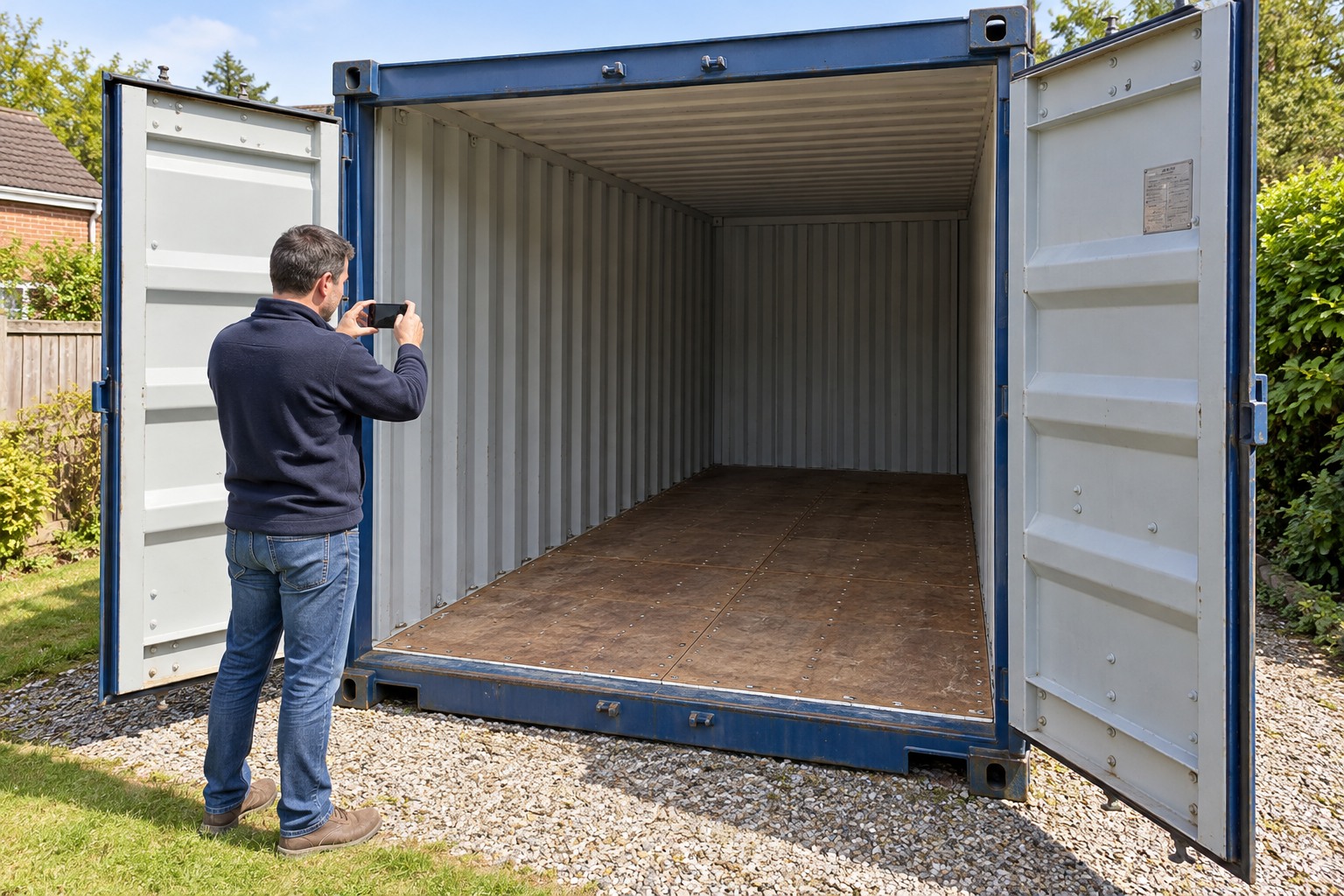
Image credit: pxef.com. AI-generated design concept.
Start with what the floor is made of. Container floors are usually plywood around 28 millimetres thick, made from many thin hardwood layers and screwed down to steel cross members that run across the box. A purpose-built container specification found in an American permit file describes exactly that, 28 millimetre plywood fixed to the cross members with self-tapping screws. Bamboo-based floors became common too, and an industry association reported that roughly 30 percent of dry containers built in 2013 had them. Some newer containers have steel floors instead, which one major shipping line notes need no chemical treatment at all. The floor also spreads loads into those cross members, which makes it part of how the box carries weight.
Then the treatment. Australia’s agriculture department requires exposed timber built into a container to be permanently treated so it can’t carry pests across the border. Because containers move around the world, many manufacturers treat floors to that standard as a matter of course. The department keeps a list of accepted treatments for plywood, applied to the glue between the veneers as the plywood is made, since treating a finished panel afterwards isn’t accepted. The accepted formulations vary, and a trade name should be checked against the relevant records rather than interpreted as an exposure result. A list of permitted timber treatments is not a declaration that every used floor contains the same product, concentration or residue today.
You can often find out which treatment a particular floor received. Most containers carry a combined data plate on one of the doors. The international body that registers container codes explains that it brings together the safety approval plate, customs information and a timber treatment entry, which records how the floor was treated. Guides to reading the plate give the same trade names as examples. The plate only describes what the factory did, though. If boards have been replaced during repairs, or something has been spilled on them since, the plate won’t say.
Treatment information is evidence about manufacture, not a finding about the present room. An industry-commissioned toxicological review is part of the available background, but it cannot certify an individual floor. Its conclusions depend on the products and exposure assumptions considered. Neither a reassuring statement about ingredients nor the presence of a treatment entry settles the condition of boards that have subsequently been repaired, worn or exposed to cargo spills. The owner’s decision needs to address that unit and the proposed activity.
Studies of air in loaded import containers address another question. Cargo fumigation and emissions from goods can affect the atmosphere in a freight box, but those observations do not identify what a particular floor contributes to a converted room. A percentage reported at a port should not be repackaged as the chance that this garden studio is contaminated. Conversely, a container that looks clean has not passed an exposure assessment. Appearance, odour, treatment records and cargo history are different pieces of information, with different limitations.
So the couple have three realistic choices, and each comes with its own trade-offs.
They can keep the original floor and seal it. That retains the original appearance, but a coating needs an assessed purpose, compatible substrate and maintenance plan. It cannot be assumed to control unknown contaminants or every exposure route. Sanding the original boards to improve their appearance would disturb material, so it is not an automatic first step.
They can cover the original floor. A designed covering can provide a new wearing surface and may include insulation, but compatibility, moisture and the underlying floor condition still need assessment. Covering unknown material is not itself a remediation decision. The cost is height and a little weight. On a standard container with about 2.39 metres of internal height before any work, a covered floor plus insulation might take 60 to 100 millimetres, depending on the build-up, before the ceiling lining takes its share. Whether the remaining height suits the intended use and local requirements needs checking.
They can replace the boards. That removes the original boards but does not establish the condition of the remaining shell, but it’s the biggest job. Because the floor is part of the structure, the replacement system and its connections need a qualified design. American building codes for container buildings, as one example, require construction documents to verify the properties of the steel and the wood floor and require wood floors to be protected against decay and termites. Removing the old floor also creates a pile of treated timber. US environmental guidance on another kind of treated wood is a useful reminder of the basic rules: don’t burn it, and check local disposal requirements before putting it in a skip.
Whichever they choose, a few habits help. Do not enter or start disturbing a suspect unit on the assumption that opening the doors has made it suitable. A competent assessment should determine whether atmosphere checks, material tests or other precautions are required. Ask the seller for the container’s history, including whether the boards are original and what it last carried, knowing the answer may be vague. Read the data plate and photograph it. If the floor is stained or smells of chemicals, or if anyone in the household has particular health concerns, ask a qualified professional whether testing makes sense before deciding. Any cutting or sanding of the original boards should be done with dust control and the protective equipment a contractor would use with treated timber.
For the craft studio, the sensible answer is therefore to postpone the finish decision until the floor and history have been reviewed. Keeping, covering and replacement remain options, not a ranked prescription. If a new surface is selected, its threshold and moisture details should be resolved without deliberately leaving an unassessed strip of old boards exposed. A purpose-built garden room offers a different starting point with a specified new floor. The container’s existing floor may be useful, but its past deserves more than a quick coat of paint.